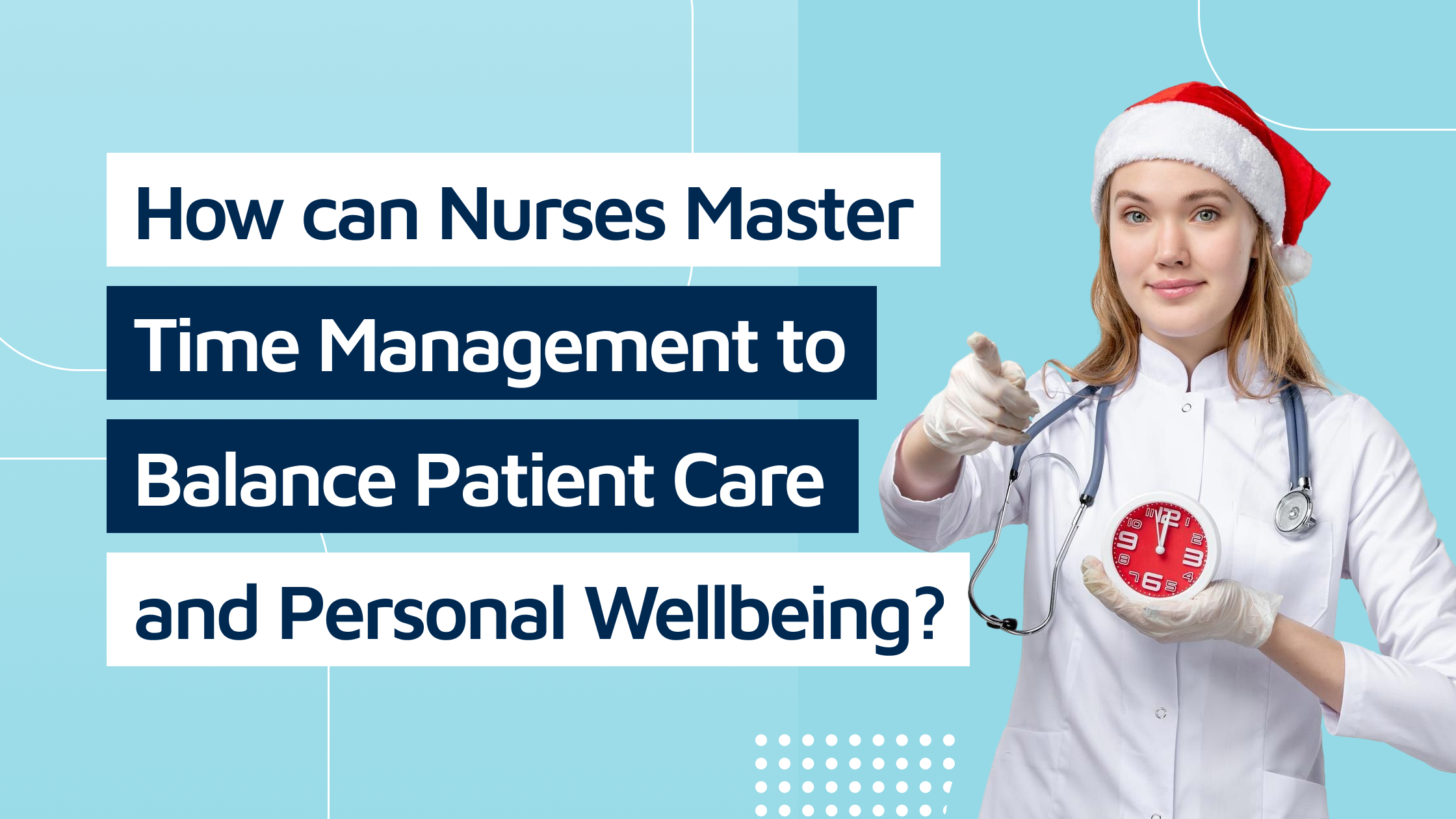
Nursing is one of the most rewarding professions—but it’s also one of the most demanding. Between long shifts, patient care responsibilities, documentation, and personal commitments, nurses often feel stretched thin. Effective time management isn’t just about efficiency—it’s about protecting your wellbeing while delivering safe, high-quality care. As 2025 draws to a close, this is the perfect moment to reset habits and enter 2026 with stronger strategies.

Why Time Management Matters in Nursing?
- Patient Safety: Organized nurses reduce errors and improve outcomes.
- Work-Life Balance: Managing time well prevents burnout and allows space for personal life.
- Professional Growth: Nurses who master time management are better positioned for leadership role.

Common Challenges Nurses Face
- Shift Work: Rotating schedules disrupt routines and sleep.
- Documentation Load: Charting and paperwork can consume valuable time.
- Patient Demands: Unpredictable needs make planning difficult.
- Personal Commitments: Balancing family, study, and rest often feels impossible.

Practical Time-Management Strategies
1. Prioritize Tasks with “Clinical Triage”
- Treat your to-do list like patient triage: urgent tasks first, routine tasks later.
- Use the ABCDE method: A (must do now), B (important but less urgent), C (can wait), D (delegate), E (eliminate).
2. Block Time for Documentation
- Set aside specific windows during your shift for charting.
- Avoid “end-of-shift backlogs” by documenting in real time when possible.
3. Build Micro-Breaks into Shifts
- Even 5 minutes to stretch, hydrate, or breathe deeply can restore focus.
- Protect breaks as non-negotiable—your wellbeing directly impacts patient care.
4. Leverage Digital Tools
- Use apps or planners to track tasks and reminders.
- Explore hospital systems’ built-in scheduling features to streamline workflows.
5. Delegate and Collaborate
- Share responsibilities with colleagues when appropriate.
- Effective teamwork reduces stress and ensures patients receive timely care.

Protecting Personal Wellbeing
Time management isn’t just about the workplace—it extends to your personal life.
- Sleep Hygiene: Prioritize consistent rest, even with rotating shifts.
- Healthy Boundaries: Learn to say no when commitments exceed capacity.
- Mindfulness Practices: Short meditation or journaling sessions can reset your mindset.

Conclusion
Strong time management is the foundation of sustainable nursing practice. By prioritising tasks, protecting breaks, and balancing personal wellbeing, nurses can deliver safe, compassionate care while avoiding burnout. As 2025 closes, now is the time to adopt these strategies and step into 2026 with confidence, clarity, and resilience.
At AuRNPathway, we know that success in nursing isn’t just about passing exams—it’s about building habits that sustain your career. If you’re preparing for the OSCE or planning your next step with AHPRA registration, let us guide you with structured support, updated resources, and a clear pathway forward.
Start your journey with AuRNPathway today—because your future in Australian nursing begins with the choices you make now.